
Garfield Parole and Probation Compared
Parole and probation can both place a person under rules while living in the community, but they are not interchangeable. Oklahoma parole is conditional release from prison confinement. The sentence continues, and ODOC supervises the person after release. Probation is imposed by a court. It can follow a jail term, begin after a suspended sentence, or occur without an ODOC prison stay. The Garfield County court docket is therefore often the most durable source for the start and terms of probation.
The Oklahoma Pardon and Parole Board handles parole decisions, while the Oklahoma Department of Corrections handles community supervision. For a nonviolent offender, the Board can grant parole. For a violent offender, a favorable Board vote is a recommendation to the Governor. That wording matters. A recommendation is not final approval, and neither a recommendation nor a grant proves the person has completed physical release processing.
| Point | Parole | Probation |
|---|---|---|
| How it begins | Release from prison under conditions after the parole process | A sentence or order entered by a court |
| Key Garfield County record | ODOC status plus the PPB result when parole applies | Garfield County court docket and the supervision record |
| Local supervision contact | ODOC Enid Probation and Parole Office when Garfield County is assigned | ODOC Enid office when ODOC supervises the case |
| What does not prove release | A hearing date, favorable vote, or projected date alone | A jail-roster disappearance or one docket entry alone |
| How it ends | Discharge or other official termination of the obligation | Court and supervision records showing completion or termination |
County-jail release is a separate event. Someone may leave the Garfield County Detention Facility on bond or after time served and never enter parole. Another person may leave that roster because of transfer to ODOC, not release to the community. GCCJA runs daily detention operations. Sheriff Cory Rink sits on its board, while the Sheriff's Office retains transport duties. The agency that records the custody change depends on which path occurred.
- Parole
- Conditional release from prison while the sentence remains active.
- Probation
- Court-ordered community supervision that may occur without a state-prison term.
- Discharge
- An official end to the identified custody or supervision obligation.
- Absconder
- A person alleged to have stopped reporting or left supervision without approval.
- Revocation
- A formal action that can cancel community supervision and return a person to custody.
Verify Garfield County Post-Release Supervision
Begin with identity, not a name alone. A DOC number, date of birth, Garfield County case number, and known booking date help separate people with similar names. The official OK Offender Lookup covers people with an ODOC custody or supervision record. It does not cover every person released from the county jail, so a blank search is not proof that no probation term exists.
- Search OK Offender Lookup by DOC number when known. Otherwise, use the full name and date of birth, then compare aliases, offense information, and the court case.
- Open the Garfield County district-court record through the OSCN Garfield County route. Review the judgment, sentence, later orders, and any entry about probation or revocation.
- If parole applies, find the month and year on the PPB dockets and results page. Read the paired result and preserve its exact term: grant, recommend, pass, or deny.
- For a violent case with a recommendation, verify later Governor action. For any favorable result, allow for ODOC processing and other holds before treating it as an actual release.
- Contact ODOC through the Enid supervision office or its official records channel. Ask for the proper way to confirm current supervision or discharge, understanding that disclosure limits may apply.
This sequence answers different questions in order. The court records the sentence. PPB records its own parole action. ODOC records state custody and supervision. Garfield County detention records document the local jail exit. An old result cannot replace a current status because supervision may transfer, a violation may occur, or another sentence may remain active.
For a county-only release, the Garfield County released-inmate search and records path starts with GCCJA and the court rather than the state parole system. Use ODOC only when the sentence, transfer record, or supervision status makes it relevant.
Note: Record the date of each lookup because court entries, parole results, custody status, and supervision information may update on different schedules.
Garfield County ODOC Supervision Office
The official ODOC office directory identifies the Enid Probation and Parole Office as the office serving Garfield County. It is the practical local route after an ODOC profile or court record points to community supervision. Staff may help direct a question, but no caller should assume that confidential case details will be disclosed. The statewide record and the correct office assignment must still be matched to the person.
Enid Probation and Parole Office
Oklahoma Department of Corrections
1016 West Broadway
Enid, OK 73707
Phone: 580-977-3400
Fax: 580-599-1993
The ODOC probation and parole office list is the source to recheck before visiting or calling. Office assignments can change, and a person living in Garfield County may be assigned elsewhere. Interstate Compact transfer can also place supervision in another state while the Oklahoma judgment remains relevant.
The official ODOC supervision-office page below shows the directory used to identify the Enid office for Garfield County supervision.
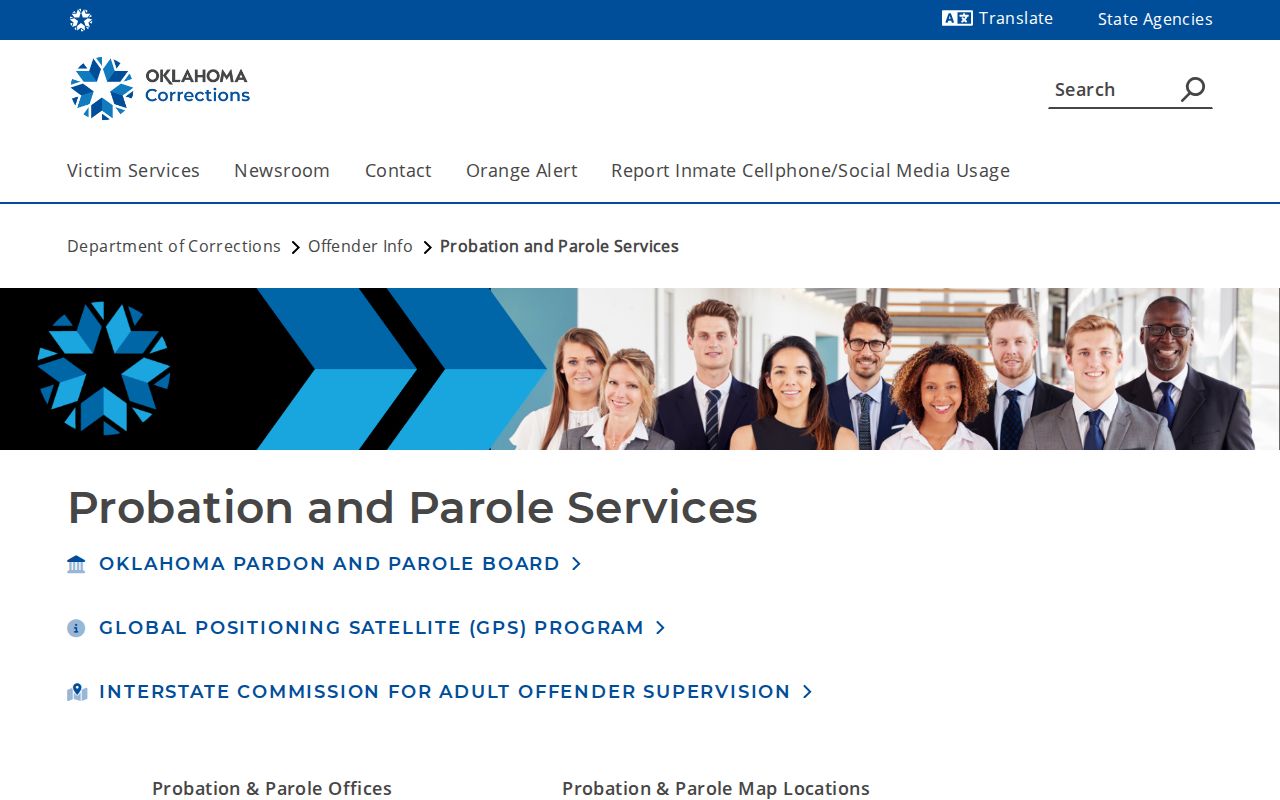
The image supports the local office route, but it does not reveal whether a named person is supervised there. Confirm identity and current assignment through the proper ODOC channel.
Garfield County Parole Result Meanings
PPB publishes monthly dockets and paired result documents. A docket proves that a matter was scheduled. It does not establish the outcome. The result document records Board action after the meeting. Three of five votes form a favorable majority, and votes are not final until adjournment on the meeting's last day and later validation.
Read the official verb. “Recommend” means the Board favored parole in a violent case and sent the matter to the Governor. “Grant” is the favorable Board action used for a nonviolent case. “Pass” moves the matter to another docket. “Deny” does not authorize parole. Even a grant can come before administrative steps, release processing, and resolution of detainers or other holds.
The PPB individual docket search requires a month and year. Optional controls include DOC number, last name, and county. A Garfield County filter finds matters associated with that county; it is not a list of everyone released from the Garfield County Detention Facility. Search adjacent months if the result shows that a matter passed or moved.
For final confirmation, pair the validated result with later ODOC status or a discharge record. Eligibility, favorable action, physical release, community supervision, and full discharge are separate stages. Keeping those stages distinct prevents a scheduled hearing from being mistaken for a completed release.
Garfield Supervision Violations and Absconders
Conditions are the rules attached to parole or probation. Their exact terms come from the governing order and supervision record. A violation allegation means officials believe a condition was broken. It does not by itself describe the final result. Revocation is the formal process that may end community supervision and return a person to custody.
An absconder label signals an unresolved supervision issue, not successful sentence completion. It generally refers to an allegation that the person stopped reporting or left supervision without approval. Absence from a fugitive or public list proves nothing about discharge. The listing may be limited, delayed, or maintained in another system.
Use the Garfield County court docket for filed probation action and ODOC for state supervision status. If a parole matter produced a revocation hearing, consult the PPB material that applies to that action. A new county booking can also relate to a different case. Match identifiers before joining the records.
OK VINE can report certain custody changes, but it is not a supervision-history database. The PPB VINE guidance specifically says OK VINE does not provide parole notification. People eligible for parole notices must use the Board's separate notification program. That limit keeps a quiet VINE account from being misread as proof that parole ended without incident.
Note: A warrant, detainer, or absconder indication can block or reverse a community release even when an older record shows favorable parole action.
Garfield County Supervision Discharge Records
Supervision ends through an official act, not merely through the passage of time. A projected completion date may move when terms run consecutively, supervision transfers, a violation occurs, a court changes the sentence, or a new obligation is added. For probation, review the Garfield County docket for completion, termination, or revocation orders. For ODOC parole or supervision, seek the current agency status or discharge record.
ODOC Legal Services provides an Open Records Request route, an authorization form for incarceration or supervision records, and a discharge contact. A focused request should provide the DOC number and specify the existing record sought. Ask whether the identified supervision obligation has been discharged and what date the agency record states. Do not ask an office to create a custom account of the case.
A discharge is stronger than an inference from a missing search result. Still, it must be tied to the correct case. Multiple sentences, a new hold, or another jurisdiction's order can coexist. The end of one supervision term does not prove that every legal restraint has ended.
Garfield County detention staff, the Court Clerk, PPB, and ODOC each control different records. GCCJA controls the local jail exit. The clerk controls filed court entries. PPB controls Board decisions. ODOC controls state custody and supervision. Direct any correction to the office that created the disputed fact.